Mileage-based road tax: why the UK must rethink how it funds its roads
Challenges of the current system
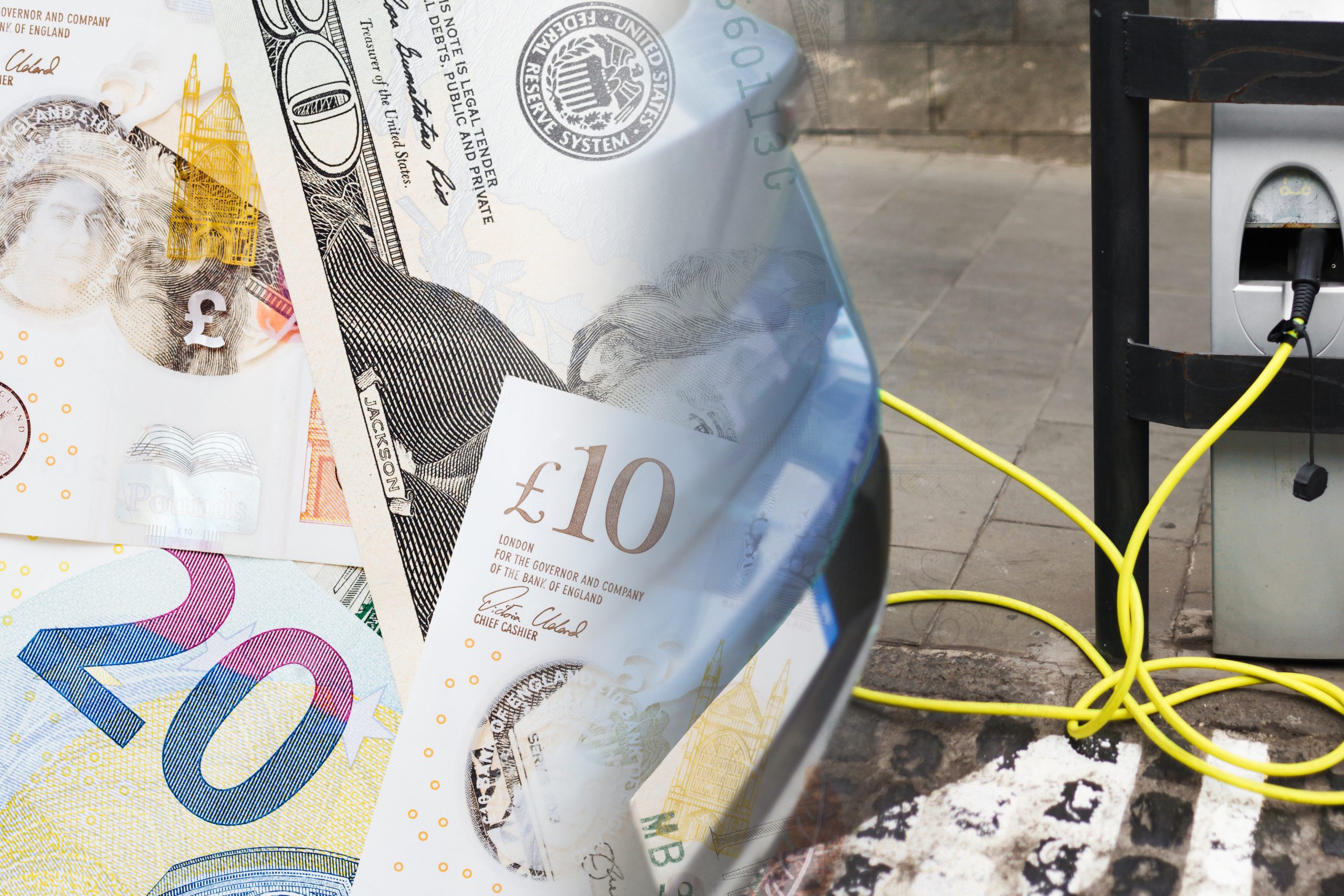
In the UK, the current tax mix is under pressure. Fuel duty and Vehicle Excise Duty (VED) are projected to bring over £33 billion to the state this year. Fuel duty represents 74% of the total. Together they will account for 1.1% of the national income.
However, as the adoption of electric vehicles (EVs) is accelerating, fuel duty income is set to plummet. The number of EVs in the UK has increased from 115,000 in 2019 to 1,505,000 in June 2025.
Now that EVs lost their VED exemption since April, funding for the road network itself is secured for the near future. However, excise duty is only a part of the wider picture. Fuel duty, unlike VED, is not earmarked for road maintenance but flows directly into the Treasury’s general budget. As EVs do not pay any fuel duty, their growing share of the national vehicle fleet will steadily erode one of the government’s important revenue streams.
Declining fuel tax revenues also raise fairness concerns: the high level of the fuel duty (often called a “perfect tax” since drivers pay in proportion to road use) de facto benefits EV owners at the expense of other motorists. This is because only internal combustion engine (ICE) vehicles pay it.
In short, the current system leads to a funding gap and equity issues as it relies on taxes that EVs largely avoid.

Origins of the mileage-based proposal
The idea of charging by distance has been studied for two decades. In 2022, the House of Commons Transport Committee, nominated by the House of Commons to scrutinise the Department for Transport, explicitly explored road pricing as a way to replace vanishing motoring taxes and a number of think tanks have echoed this. Case in point being the Social Market Foundation Miles Ahead report that urged the quick introduction of a new system that taxes drivers “according to how much they drive” to replace fuel duty with a new fair system.

Most recently, The Guardian (citing Treasury sources) suggested that Chancellor Reeves will unveil a 3 pence-per-mile surcharge for EVs from 2028.
That plan – dubbed “VED+” – would require drivers to declare (and pre-pay) expected mileage when paying their annual VED. Lower rates would apply to hybrid vehicles.
In summary, policy makers are now actively considering pay-per-mile as a response to the EV-driven shortfall. With a current average annual mileage of 8,900 miles, the VED+ tax could bring an additional £270 per EV – over £400 million in total – at current level of EV adoption. We detail below the key advantages of a mileage-based tax.
Advantages of a mileage tax
A mileage-based tax for EVs could mitigate many problems caused by the decrease of the fuel tax income.
Among other things it could:
- Partly or entirely replace lost fuel revenue: Charging by mile would ensure that EVs contribute to road funding, plugging the multi-£billion gap. A 3 p/mile EV fee could raise approximately £400 million/year from today’s 1.5 million EVs, scaling to around £1.8 billion by 2031 as EV numbers hit 6 million.
- Introduce a fair “user pays” principle: Like fuel duty, distance pricing charges drivers in proportion to use. As the Transport Committee notes, the fuel tax is “reasonably transparent and fair”: more miles (and heavier loads) mean more tax. A mileage tax restores that link for EVs, treating electricity- and petrol-powered cars on equal footing.
- Incentivise road efficiency: By taxing actual distance, the system can be extended and adjusted to discourage excessive driving or target congested times/areas (e.g. higher rates for rush-hour or busy streets).
- Apply to all vehicles, whatever their powertrain technology and vehicle category.
Disadvantages and concerns
However, introducing tax for specific group of vehicles could also raise a number of concerns:
- Privacy and trust: A number of drivers could perceive that they are being tracked. Even if not continuous, knowing the government could verify your trips (via ANPR cameras or odometer checks) may provoke resistance. Building trust through a combination of technology, transparency and strong data protection mechanisms will be crucial.
- Administration complexity: A new system implies the setting up of a new IT and enforcement system within Driver and Vehicle Licensing Agency. Although the currently mentioned proposal would rely on annual odometer declarations (avoiding real-time GNSS), there would still be costs in auditing mileage, preventing fraud, and handling exceptions. The transitional complexity would not be trivial.
- Negative impact on EV uptake: A mileage tax could slow the switch to electric if the mileage based tax is directed exclusively at EV drivers.
- Legal unclarity: A tax targeted specifically to EVs could be seen as discriminatory and this issue may require larger tax system adaptations.
- Technical implementation challenges: As the current proposal avoids in-vehicle on-board units (OBUs), drivers would simply estimate their annual mileage upfront when paying VED. The system would also need to prevent evasion or tampering. Odometers can be rolled back, and smartphones or OBD devices (if used) could be spoofed, so robust auditing is needed. It’s also unclear whether motorways might have different charges.
It is important to note that an odometer reporting solution would have a specific number of drawbacks:
- It would be unfair for drivers who drive outside the country, as their miles outside of the country would be exposed to the charge (on top of any foreign tolls);
- Unless otherwise designed, it would not apply to visiting foreign vehicles, which also creates imbalances;
- It would be open to fraud as the manufacturing of a fake odometer photo is very simple, particularly with AI;
- It would be manual, which means that its apparent simplicity hides a lot of hidden time for all drivers to use their personal time to report their mileage, exposing them to penalties if they omit to;
- It would generate revenues only the year after the driving, as opposed to a system where the charge is calculated regularly (for example, every month).
- It would not allow the development of a smarter traffic management solution, for example, the charging at higher rates at peak times to reduce congestion.
Based on our analysis of the feasibility of charging EVs in other countries, we believe that an odometer-based solution is not future-proof.
Several of the above-mentioned drawbacks do not have robust resolutions, limiting the robustness and scalability of the system. For example, what if 20% of the population provides fake odometer photos? This would ultimately destroy the credibility of the scheme and lead to its eventual cancellation.
In our view, only in islands isolated from other countries (e.g. Iceland) can an odometer solution be relevant for RUC. And a robust (probably costly) enforcement solution must be provided to counter fraud.
We believe that a manual mileage reporting system is a solution of the past that could actually lead to a failure of road usage charging (RUC) in the UK.
What are the alternatives?
Based on our analysis, there are at least 3 sets of solutions that can be deployed today, namely:
- GNSS-enabled black box-based solutions, as has been successfully done in all countries that operate RUC schemes for Heavy Goods Vehicles, namely Germany, Belgium, Switzerland, Poland, Bulgaria, etc.
- Connected vehicle-based solutions, as all EVs are by default equipped with GNSS- and cellular-enabled devices;
- Smartphone-based solutions, as all smartphones have embedded GNSS and connectivity modules too.
What next?
In summary, the UK’s shift to EVs is making the current road funding model unsustainable.
A new charging model is needed to keep roads maintained and charges fair. A per-mile tax is one leading option: it ensures EV drivers contribute to road funding and could be designed to be revenue-neutral and efficient.
However, its success will hinge on its technical design, privacy safeguards, and political support. The move to an EV-friendly road charging system is complex but necessary. With careful design and collaboration, we can help ensure it is fair, efficient and future-proof.
For those interested how the take-off of EVs will also impact other European countries, please refer to our recent European analysis of road charging.
Feel free to reach out to us at [email protected] to discover how to leverage existing and future-proof technology for road pricing.