Telematics data is the one piece of claims evidence AI cannot fabricate
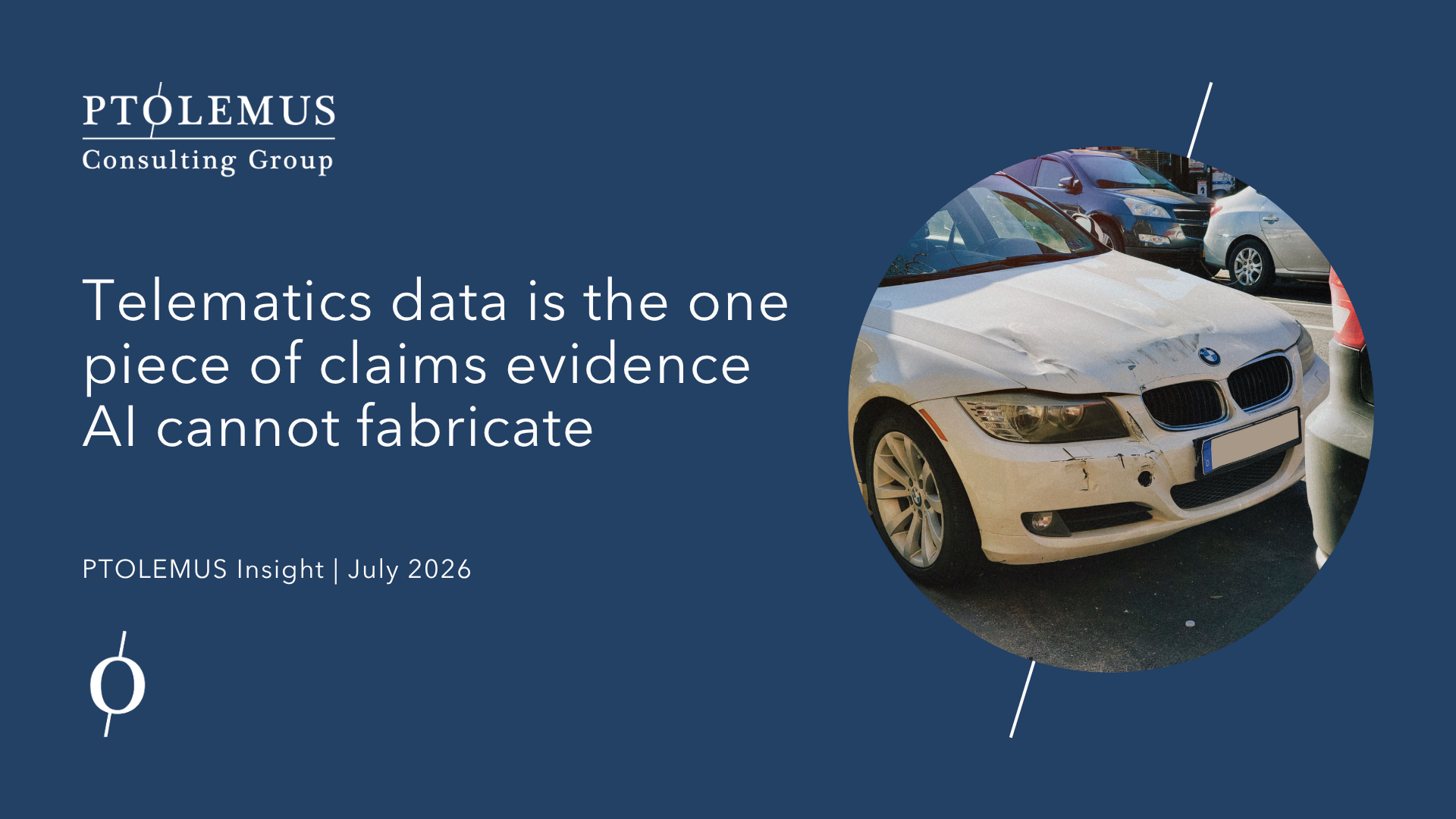
Aviva detected almost a quarter of a billion pounds of suspected claims fraud in 2025, with AI-generated images and doctored documents an increasing feature. For motor insurers, that raises the value of data captured before the claim was ever filed.
Aviva UK just reported that it had uncovered more than 18,400 suspect claims worth £233 million across its brands in 2025, roughly £638,000 a day. It is a record for the insurer, though it is also the first year the figures include the Direct Line brands acquired in July 2025.
Most of the press coverage focused on the total. The more useful detail sits underneath it. Aviva says a growing number of claims now arrive supported by AI-generated images and manipulated documents, particularly in motor.
The value of detected motor fraud rose 39% year on year, motor still accounts for more than 7 in 10 of the fraudulent claims Aviva finds, and fraudsters are shifting away from staged collisions towards exaggerated claims for vehicle damage, repair costs, credit hire and injury. In other words, the incident is increasingly real but the evidence around it is not.
Fabrication has become cheap
Allianz flagged the shift back in 2024, reporting a 300% rise between 2022 and 2023 in cases where apps had been used to distort real images, videos and documents. One claim involved a photograph of a tradesman’s van lifted from his own social media page, with a cracked front bumper added digitally and a repair invoice for over £1,000 attached to an accident that never happened. It was caught because an investigator recognised the original picture online.
Verisk‘s 2026 State of Insurance Fraud study suggests the behaviour is now closer to mainstream than criminal. Some 36% of consumers said they would consider digitally altering a claim image or document to strengthen their case, rising to 55% among Generation Z, while 98% of insurers agreed that AI editing tools are increasing digital fraud. Set against ABI figures of £1.16 billion in detected general insurance fraud, £576 million of it motor, the direction of travel is not in much doubt.
Insurers are investing in their own AI and analytics, and Aviva has been open about doing exactly that. The difficulty is that both sides then work on the same material: digital evidence produced by the claimant after the event. Every improvement in generation quality chips away at a detection threshold, and the insurer has to be right every time.
Why telematics evidence is different
Telematics data sits outside that contest. It is recorded independently, at the moment of the event, before a claim exists and before anyone has a reason to shape it. There is no version of it for a claimant to submit, edit or invent.
Three uses matter most in practice.
1. Establishing whether the event happened as described. Crash detection captures time, location and severity, so a collision reported at the wrong time, place or speed shows up immediately. A convincing photograph of a crumpled bumper is now cheap to produce. A deceleration profile already sitting in the insurer’s data three weeks before the claim was filed is not.
2. Testing exaggeration, which is where the money is. Impact severity data lets a handler compare recorded forces against the damage and injury claimed. A low-speed car park knock followed by a substantial credit hire and injury claim becomes an objective challenge rather than a suspicion.
3. Catching application fraud. Aviva stopped more than 105,000 fraudulent applications in 2025, with ghost broking up 7%. Mileage, location and behavioural data make fronting, address manipulation and misrepresented usage hard to sustain across a policy year.
The evidential position is already established. In Wise v Hegarty and Alpha Insurance (2019), telematics data taken from a box fitted to the defendant’s vehicle supported a finding of fundamental dishonesty against the claimant. Telematics providers including IMS and OCTO now offer forensic reporting and expert witness services on that basis.
The limits
Telematics only helps where the policy carries it, and penetration across most European motor books is still a minority of the portfolio. Third-party claims are the larger UK exposure, and the fraudulent party is frequently not your own policyholder, which makes industry data sharing as important as any individual programme. A hard braking event also proves very little on its own, without the analytical layer and the trained handler around it.
The business case has shifted
Connected insurance business cases have generally been built on pricing and risk selection, with claims treated as a secondary benefit. Our UBI Global Study finds claims cost reduction, covering fraud detection, eFNOL and accident reconstruction, to be among the largest and most dependable sources of value in a telematics programme.
As fabricated evidence becomes cheaper, independently captured evidence becomes more valuable. Aviva’s £233 million is what one insurer managed to catch. The insurers best placed to keep catching it are the ones already holding data their claimants cannot manufacture.
Find out more
The PTOLEMUS UBI Global Study, now in its 5th edition, runs to 1,360 pages across 33 markets and reviews more than 450 active UBI programmes, drawing on 65 executive interviews and a 1,500-respondent consumer survey. It includes 61 stakeholder profiles and forecasts to 2035.
A free 100-page abstract is available to download, or contact me to discuss the full study.
Article written by Alex Tallon, under PTOLEMUS copyright
Related study
UBI Global Study 5th Edition: Essential intelligence for insurers, OEMs & telematics leaders
The most comprehensive analysis and forecast of the Usage-based Insurance market ever published
Related industry