Telematics for Fleet Management
February 6, 2012 by Yan
Telematics for Fleet Management Europe 2012.
Frederic Bruneteau, Managing Director at PTOLEMUS Consulting will be guest speaker at the conference on the 26th-27th March 2012, The Mövenpick Hotel, Amsterdam, The Netherlands
What is your role in the fleet telematics market?
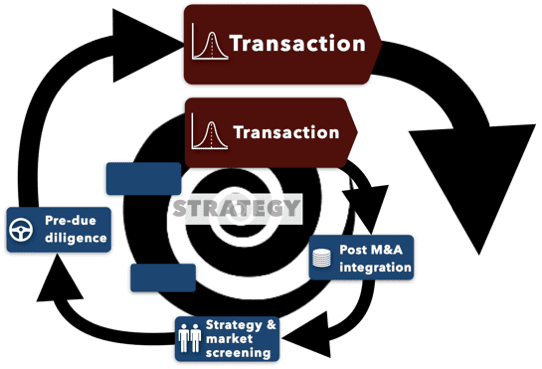
PTOLEMUS advises all players, from TSPs to major telematics customers, in their strategy, their innovation management or their business development.
Contrarily to most strategy consultancies, all our consultants have management experience & expertise in this industry. This makes them credible and operational from day one.
We are also often called upon by VCs and private equity funds who wish us to evaluate their target, generally in the context of a commercial due diligence process.
What major advances do you think the telematics industry has made in 2011 relevant to fleets?
Obviously, the European Commission has announced that it will take regulatory measures to make eCall mandatory for all passenger cars (whether company owned or not) and LCVs (Light Commercial Vehicles) by 2015.
This will have a big impact on the uptake of telematics in fleets, as all new LCVs will then be shipped with a black box and a SIM card. This is also likely to increase of OEMs, who will have a big incentive to bundle eCall with many connected services, from traffic information to remote maintenance.
In addition, a major change is the fact that the industry has clearly shown a path towards consolidation. Vector acquiring TrafficMaster; Trimble acquiring Punch Telematix; Francisco Partners acquiring Masternaut (through Cybit)… Scale is increasingly becoming a major factor.
Finally, TomTom Business Solutions’ impressive success shows that the old one-to-one selling approach that the fleet has used may be old-fashioned. TomTom’s indirect channel strategy has worked very effectively. It is also coherent with its low cost, high volume product strategy.
What challenges do you think the industry still faces?
Increasingly, the industry will have to move towards an open ecosystem, i.e. a system comparable to the App Store in the mobile world. From an economic point of vie, it is becoming increasingly complex for TSPs to develop all new products on their own.
A more des-integrated approach, based on open architectures, comprehensive development toolkits and development communities, is required.
Only this move will enable the dramatic cost reduction that many accounts expect to jump to telematics.
What is the key to successful deployment of telematics technology in commercial vehicles in your opinion?
A few prerequisites in our view include:
- A detailed understanding of the fleet’s operational needs, translated into technical requirements,
- A cost-benefit analysis of the telematics solution and a technical comparison of the different available systems. This will avoid duplicate investment.
- A communications policy towards all drivers that emphasises the positive aspects of telematics, for example the fact that delivery staff will arrive earlier at home in the evening
- An integration with back-office IT systems and management processes.
What key topics or issues you are looking at discussing with the industry at the show and why are they important for moving the industry forward?
- The integration of traditional fleet applications with now expected B2C services such as navigation, traffic information, speed cameras, local search, etc.
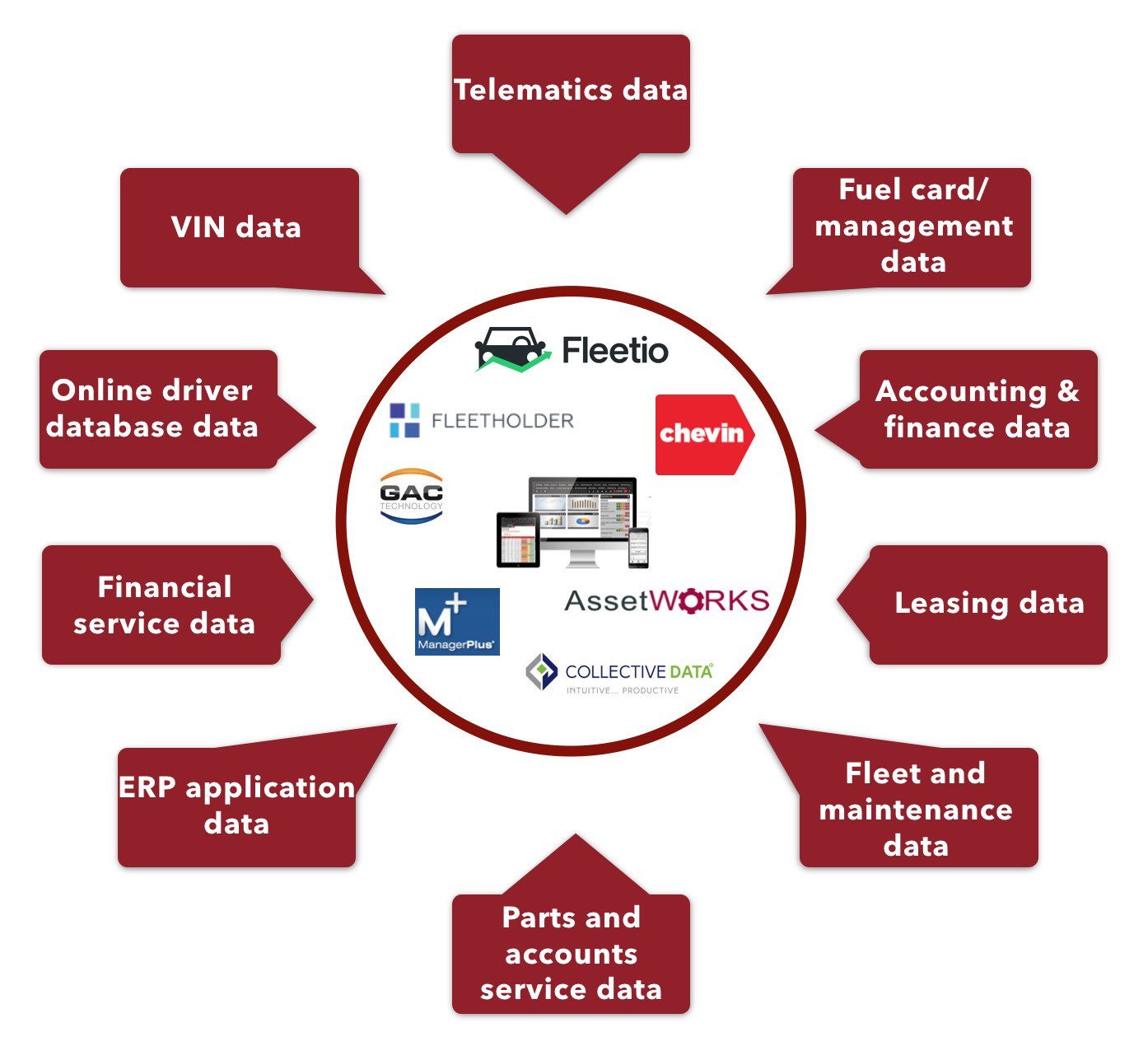
- The integration with back-office IT systems, notably ERP systems
- The opening of closed OEM-controlled operating systems and data (notably FMS-related) to outside developers. This was promised by several OEMs in 2011, notably Volvo and Daimler. I will look for evidences this year!
What developments/trends do you see impacting the industry over the next 2-5 years?
- eCall surely (see earlier)
- The commoditisation of simple track & trace, which may even become free
- Combined strong price decreases / volume growth
- The des-integration of the value chain towards open telematics.
3G telematics has started…
October 17, 2011 by admin
This summer, 3 sectors of telematics were transformed by key acquisitions.
In the Personal Navigation Industry (PND), Garmin completed its acquisition of Navigon. In the traffic information domain, Inrix, the American traffic information provider, made an offer to acquire ITIS Holdings, its UK-based competitor.
That is not all, in June, voice-recognition leader Nuance Communications acquired Swiss-based SVOX, thereby building up its presence in the automotive market for voice solutions.
In the field of B2B telematics, we have also experienced increasing consolidation. Notably the acquisitions of TrafficMaster, Masternaut, Punch Telematix, etc.
What was the common point of all these acquisitions? Well, actually, there were two common traits to these.
First, all acquirers were American companies!
On a closer look, a company such as Trimble Navigation closed 19 acquisitions including 6 related to telematics within 3 years:
- PeopleNet, a leading US provider of integrated onboard computing and mobile communications systems for fleet management,
- Yamei Electronics, a Chinese manufacturer of automotive electronics products used for anti-theft GPS monitoring and tracking, and on-board diagnostics systems,
- Tata AutoComp Mobility Telematics Limited, a provider of telematics solutions and Mobile Resource Management (MRM) services in India,
- Punch Telematix, a Belgian supplier of fleet management solutions,
- Accutest Engineering Solutions, a UK-based provider of vehicle diagnostics and telematics technologies for the automotive industry.
It is quite striking to see companies from the country with the highest public debt in the world ($14 343 088 000 000 at the end of June or over fourteen trillion dollars) making so many acquisitions.
Would you expect companies from a high-debt country such as Greece or Japan to acquire so many foreign businesses?
In fact, there are links between the macro- and the micro-economy. Thanks to two rounds of quantitative easing, the Federal Reserve quadrupled its holdings of US treasury bonds in two years (from 500 billion to 2 trillion dollars) to rescue the American economy from the credit crunch. Channels to the “real” economy of this financial booster abound, starting from credit growth to low interest rates. It led to a major increase in the price of assets, notably the most risky assets that are technology companies.
Unless foreign investors start doubting the sustainability of the dollar, this could continue, particularly if the Fed launches a third round of quantitative easing in the coming weeks.
Second, this M&A activity is the symbol of a 3rd age of telematics coming to us.
In our view, the early models of 2nd generation telematics, invented in the 2000s are being challenged. Several stars of this period are now suffering: TomTom, Navteq, Garmin, Masternaut, TrafficMaster, etc…
These companies had been excellent at revisiting the models invented by the car industry in the 1990s and had benefited from the opening of GPS to civil applications and the emergence of low cost consumer electronics components. But it is so difficult to recognise the crisis and act on it early enough when you are the leader and/or the inventor of a category!
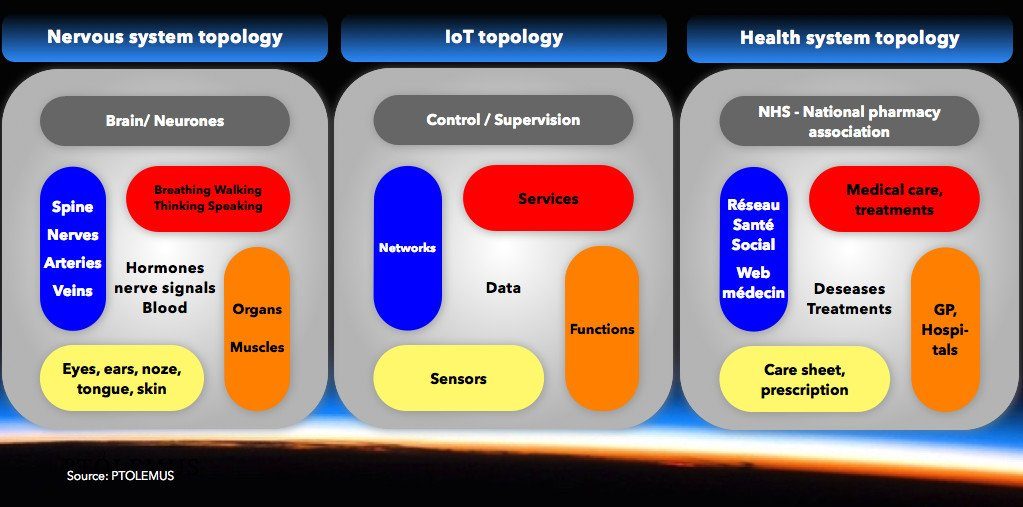
What have these models in common? They are all facing the new paradigm of telematics that we attempt to describe below.
What is 3G telematics?


Source: PTOLEMUS
Which companies best epitomise 3G telematics in our view?
In the field of content, OpenStreetMap has been extremely good at producing free maps and is now starting to open it to third party developers. For example, NNG (formerly NavNGo) has developed a free onboard mapping application for iOS and Android smartphones.
Navigon, despite the fact that it was acquired by a larger and more diversified Garmin, has been actually better at understanding how to survive in 3G telematics when you are a small player. Hence the amazing success of its smartphone navigation and traffic applications.
With Sync, Ford has been a master example of how to integrate the mobile phone into the car and rebuild the credibility of the OEM around it. With MirrorLink (previously know as Terminal Mode), Nokia is trying to shape an alternative model of smartphone integration.
Coyote Systems, the French speed camera provider, is also a classic example of how to challenge large companies such as TomTom by leveraging crowd-sourcing and the community.
Mobile Devices, the company behind Coyote’s connected PND has proven that the user does not really care about whether he / she uses a mobile phone, a PND or an embedded system. The question is whether the system is 1. The best to achieve its primary purpose or not, at the lowest cost possible 2. It is a platform opened to a large number of third party applications.
From these success stories, let me draw 3 MUSTs of a car telematics strategy today:
- Shape an ecosystem or leverage it before or better than others : the most agile company and the best brand cannot win against an ecosystem: think about Sony or Nokia…
- In the Internet era, what is possible WILL become available. So choose the way you can do it before others do and get all the credit,
- Integrate the mobile phone in the car and build your value added on top of or around it.
Finally, is there any link between the M&A frenzy of American players and this new age of telematics?
Well, yes.
To become a global player, cash helps! Inrix’ $37 million funding by Kleiner Perkins and August Capital before its acquisition of ITIS is a case in point.
Second, American companies can leverage the largest market in the world to gain economies of scale and build a worldwide ecosystem.
Last, the US dominance of the Internet, mobile and software worlds is an advantage to better create ecosystems.
So, yes, it is probably true that you need to be better if you want to succeed as a non-US player in the 3G telematics industry today.
Positioning is a key differentiator
June 29, 2010 by dgeethom
We talked to a number of device manufacturers at the Nav&Loc show in Berlin earlier in June and presented the European Location Study results to a few of them. While many avoided the lesson, a few came up to me and sheepishly confessed they ought to know more about how location worked.
Let’s be honest, we all think we know what we need to about how we get location and the choices available. But we don’t, really, not when it comes to defining what positioning technology is going to be used in a new device. “GPS is cheaper, the others are not good enough” is where the discussion usually starts and ends.
It’s taken the industry ten years to look outside the two map providers. How will it take us to look outside GPS?
Having just finished writing the Location Study, we realised there is indeed a lot we should know about. Most importantly, however, we need to acknowledge that positioning is a key differentiator – yet few will care enough to reap the benefit immediately.
So where do you stand? How much does your product benefit from your understanding of positioning?
Let’s put that to the test. we devised 10 questions about the different aspects of positioning. Some are business-orientated, others are technology related. The answers follow below the set of questions. Feel free to tell me if you get 10/10!
1. Which is the most accurate positioning technology?
a. Galileo
b. A-GPS + Cell-ID + Wi-Fi
c. UWB (Ultra Wide Band)
2. Are all European cellular networks equipped with basic location equipment (Cell-ID based positioning) – and what about MVNOs?
a. All operators in Europe must be equipped with Cell-ID because of E112, including MVNOs
b. Approximately 70% of the mobile operators have a GMLC providing LBS but E112 works on all mobile phones
c. Only mobile network operators have GMLCs. MVNOs are not E112 compliant
3. Is Wi-Fi positioning growing faster than GPS?
a. In Europe, Wi-Fi positioning is still in its infancy and GPS is much more used
b. Both technologies are growing fast but GPS is growing faster
c. Since the iPhone, WPS is growing faster than GPS
4. What are “Control Plane” and “User Plane”? Which is relevant to A-GPS?
a. Control Plane is controlled by the device and User Plane via the Internet. A-GPS is controlled by the device manufacturer or the OS
b. Control Plane is managed by operator infrastructure whereas User Plane is controlled by the device. A-GPS uses User Plane (SUPL)
c. Control Plane is circuit switch-based and User Plane is packet-based. A-GPS can work on both Control and User Plane
5. Will multi-GNSS constellations ((for example, Galileo + GPS) and EGNOS improve accuracy?
a. Galileo will improve accuracy and EGNOS can improve it down to the metre range
b. Galileo won’t change much in accuracy but will improve reliability and availability; EGNOS won’t change much for land-based positioning, it’s mostly useful for aircraft
c. Galileo won’t affect accuracy but EGNOS will improve it
6. Do developers have to pay to use GPS, WPS or Cell-ID location on mobile phones?
a. Free on iPhone, Android only
b. Free on iPhone only
c. Free on all platforms except Symbian
7. Who has the biggest user location database?
a. Large application providers
b. Device manufacturers such as Nokia or QUALCOMM because they have the largest installed base of mobile devices (consumer or commercial)
c. Location aggregators because they have deals with many operators
d. Infrastructure providers
8. What’s the W3C Geolocation API and why is it important to mobile operators?
a. It’s used to obtain free location on Android
b. It’s how you obtain free location on the web
c. It’s what provides the device location to the browser
9. How many cellular operators in Europe are able to provide A-GPS?
a. All of them because of E112
b. Only a handful of them because it’s very expensive
c. None of them; it’s not their role
10. Which is the cheapest positioning technology?
a. GPS because it’s a fixed price
b. WPS because it’s software only
c. IP location because it’s used in billions of requests
Answers:
1: c. Galileo will not improve accuracy as such but will dramatically improve the quality of satellite positioning; 4 metre accuracy is the official estimate. A-GPS is not assisted by other technologies, so there is no change in accuracy when Wi-Fi is working alongside it. UWB can be accurate to 20cm in controlled environments but more technologies with competitive quality are being launched right now.
2: b. MVNOs do not control the positioning servers owned by the operators but their phones are still locatable through these servers. Despite half the networks in Europe not actually owning a positioning server (GMLC), all phones in Europe have access to some form of location for the purpose of E112. Only about 70% of the wireless carriers use this capability to provide LBS because the case for investing in positioning has yet to be explained properly.
3: c. If we consider that WPS (Wi-Fi positioning) is only about seven years old, then of course it has the biggest growth pattern. However, we expect the growth of GPS between 2008 and 2014 to be faster than that of WPS. During the same period the growth of sensor penetration in mobile devices to assist location will be even faster. The size of each technology market as well as their addressable markets is detailed in the European Location Study.
4: c. The Control Plane is the network infrastructure of the operator. It is circuit-switched. User Plane is a packet-based alternative. Right now SUPL is mostly used on the User Plane but confusingly it can be set up on a Control Plane infrastructure. A simple graph with plain explanation will be available in the free Location Study.
5: a. Galileo will improve the quality of positioning, not only its accuracy. If used as part of SUPL, EGNOS can improve accuracy to one metre range in the countryside. But there are many other parameters to consider.
6: b. Developers do not have to pay to use location on Android, Nokia Ovi and iOS. At the moment the other platforms will not provide free positioning data but Symbian^3 has enabled the provision of a large range of data sources for Wi-Fi and Cell-ID. However, a number of developers and device manufacturing are choosing to pay for location even though it is available free.
7: c. There are many ways to access location data and the sources vary in size and content types. We suggest that the best source of live location data is the location aggregators in Europe such as Deveryware in France. Infrastructure providers will in some cases have access to mobile location data but it won’t be live and will be anonymised.
8: c. The location API for the W3C is a way for the browser to get access to the device location and send it to the application. It is important because it enables off board applications to use location on smartphones, for example.
9: b. Although the cost of the SUPL infrastructure is coming down rapidly and the mode of distribution is expected to become more liberal and flexible, only a few companies in Europe are able to provide A-GPS. A full list of the operators, chipset manufacturers and other players currently having this capacity is included in the study.
10: b. WPS cost cannot include the chipset, which is fulfilling another primary function. Therefore WPS will cost less than GPS. However, IP location is used in billions of requests and if we compare the technologies by cost per request, then IP location is vastly cheaper.
How did you do? Are there answers you are still not sure of? Simply download the free European Location Study!
The rush for location databases
Coming back from the rather buzzy Location Business Summit Europe 2010 a few things were clear to me: operators haven’t yet written down their location strategies, LBA is a reality the agencies are now very interested in, and everybody thinks it’s a great idea to build their own location database.
The most popular way to do this is not to send funny vehicles around every street in the world like Google and Skyhook did but to let your users do it for you.
So here comes the sniffer software, audacious little spies on your phones that not only tell you where you are but tell their masters where the Cell-ID and Wi-Fi networks are in relation to your GPS location.
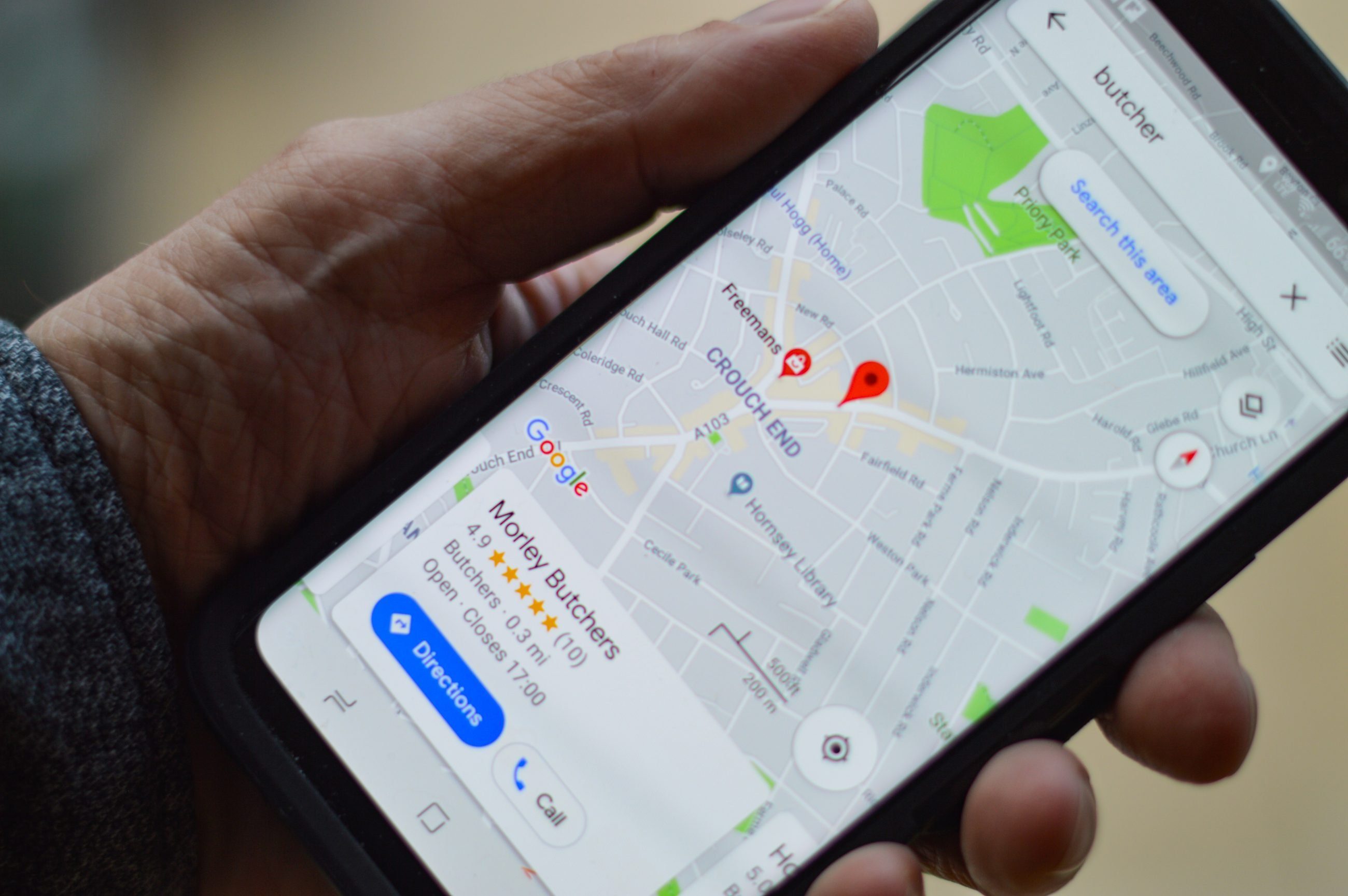
It’s innocuous enough if battery and privacy are not important issues for you. I ran Google Map in London for a full 40 minutes before my battery gave up… enough time for Google to know exactly where I went shopping that day.
However, Google is only half the story this time. There is a real awareness from the different LBS players about the need to own the location provision. Operators want Wi-Fi databases, device manufacturers want everything (Cell-ID, Wi-Fi and more if available) and application developers want indoor location and maps.
The point here is to provide fast and cheap location to devices and applications not covered by the free APIs of Google and Apple. Access to these databases will provide fallback to Wi-Fi positioning and then to Cell-ID triangulation when GPS is not available. This is not to be confused with Assisted GPS; these databases do not (yet) actually assist GPS in getting faster TTFF. This will however come in the next version of SUPL, the standard by which A-GPS data is exchanged.
That’s probably why I keep meeting interesting but rather new companies like Location-API that are providing sniffed databases to the biggest bidders such as Statsis, Deveryware or Combain.
Keeping the data current
Location-API has one of the biggest databases of Cell-IDs, claiming 6.78 million of them worldwide. This is a huge database, so how do they keep it updated?
Rikard Windh, co-founder, Combain Mobile AB, explains: “It keeps updated with a continuously significant flow of positions every day. For the calculation of the Cell-ID and Wi-Fi AP position we only use the 100 latest submitted positions. If Cell-ID changes or the Wi-Fi spot moves, it will be adjusted automatically after a while. ”
For Wi-Fi, Statsis in the UK is mapping access points in various markets where they have trials with operators and service providers. They focus on the indoor mapping segment.
Rob Palfreyman, CEO of Statsis, explains that their approach is to run the sniffer on the device so the database is updated off-line and fed back to the server only when convenient. This saves power and avoids roaming data charges. Also the database can be loaded on the device before travelling to enable off-board location and avoid data charges (the file will typically be less than 2MB).
Statsis is currently engaged in trials with a major MNO and two major silicon vendors. They also support the Symbian Foundation with contributions and have their own brand applications.
For clarification: unlike Android, Symbian will not provide free location data to the application developers but let the device manufacturers and the developers chose different available sources. It will be up to the device manufacturers to decide who pays for location data on Symbian ^3 and ^4.
The largest database is however Skyhook’s, with more than 200 million APs mapped.
Bootstrapping the crowdsourced data
I asked Ted Morgan, CEO of Skyhook, if all iPhones were systematically sniffing for Cell-IDs and Wi-Fi APs to update the Skyhook database.
“We can’t talk about specific devices of customers, but our core location engine does not background sniff or probe for cell or Wi-Fi data. We merely use the user-driven location requests to update and improve our data. It is only done when the user is requesting location, unlike how others do it quietly in the background several times a day. ”
So 10 million iPhones and iTouches in Europe improve the Skyhook data? How does that compare with the few thousand Skyhook wardrivers? And would it be correct to suggest Skyhook’s database is now mostly crowdsourced?
“No, we feel very strongly that a reliable location system requires both systematic field (drive) scanning and device updating. One or the other is not sufficient.
“Because crowdsourced data by definition follows the crowd, so it is dense in some areas and very spotty in others. Good positioning requires a balanced set of reference points on all sides.
“When you have them clumped on a road, you get poor results. Think of a highway with cell towers following the highway. As long as you are on the highway, you can use the cell towers fairly well for location, but once you get off the highway, those cell towers do a poor job of telling you where you are. Also you can’t build up the crowdsourced data unless the crowd has apps it wants to use and those apps need location in the first place. So the driving data helps bootstrap the crowdsourced data to a certain extent. And then going forward the driving is less frequent but still needed to level set the data.”
So how do sniffing technology and methodology compare?
I did ask Ted that very question, but the guys at Xconomy got there first (it’s not fair, they are both in Boston!). So here is the answer:
“There are a couple of different approaches to getting the signal data; one of them is active scanning, and the other is passive sniffing. Both techniques have their pros and cons, but when you are doing the passive sniffing you have to make sure you are not accessing private network messages. It’s not a hard thing to do; you just do not record those messages.”
Google surveys Wi-Fi networks for the same basic reason Skyhook does – to provide an additional way, beyond GPS and cell tower triangulation, for phones to determine their locations.
In active scanning, Wi-Fi surveyors driving down a public street send out probe requests that ask every Wi-Fi access point within range to respond. This happens very quickly. The downside is that if an in-range access point happens to be busy -say, helping its owner download email – it won’t respond to the probe request, so the surveyors will miss that network.
The way around that problem is to use passive sniffing, which picks up all of the traffic travelling over active Wi-Fi networks, including key identifiers such as SSIDs (network names) and MAC addresses (similar to serial numbers, these are unique to each Wi-Fi router). The downside of passive sniffing is that it’s slower than active scanning, since routers may be broadcasting on any of a dozen channels, and each must be sniffed individually. “And you have to make sure you do not capture any of the network messages,” says Morgan.
Which is just what happened.
Google’s sniffing blunder
Google disclosed last Friday that its Street View cars had mistakenly collected data about the websites users were visiting on open wireless Internet networks.
Alan Eustace, a senior executive in Google’s engineering and research department, apologised for the mistake in a blog post and said the company was working with regulators to dispose of the data.
He said the company had stopped its Street View cars, which are used to gather information for Google’s mapping service, from collecting Wi-Fi data entirely.
Eustace also stressed that the data was only collected from networks that were not password protected, and that it was never used “in any Google products.”
I think it’s fair to say the appologies didn’t go a long way to appease the growing mistrust in all things Google…
Navizon is the positioning technology provider that holds the biggest share of global Cell-IDs, mapped at 7 million, and the widest global coverage of Wi-Fi APs.
Cyril Houri, Navizon’s founder, quite aptly said out loud what everybody was thinking: “This story is totally astonishing. The data that Google was collecting in secret (the network activity) has nothing to do with the Wi-Fi information required for geolocation. And storing and maintaining the data cannot be done by accident over a period of four years since it requires massive storage space.”
More on Cell-ID and Wi-Fi positioning with all the market figures, the player comparisons and the trends in Europe will be found in the European Location Study to be published at the end of May by Ptolemus and sponsored by Navizon.